Chapter III · Iconography
The Language of the Sacred.
Every element of a Tirthankara's representation is intentional — a visual scripture readable across centuries and dialects. Here, the conch speaks first.
Every element of a Tirthankara's representation is intentional — a visual scripture readable across centuries and dialects. Here, the conch speaks first.
Each Tirthankara is identified by a unique lanchhan — a sacred emblem carved at the base of the throne or beneath the meditative figure. For Lord Neminath, that emblem is the Shankh, the conch.
The conch is the original sound of dharma, the call that awakens the slumbering soul. Where Krishna's Panchajanya conch summons the warrior, Neminath's conch summons the renunciate — both, in their own register, demanding awakening.
Meaning of the Conch →Across Indic traditions the conch carries dense layers of meaning. As Neminath's lanchhan, it crystallises three of them with particular force.
The conch is breath made audible — air drawn in, transformed within the spiral, released as resonant call. It is the first sound of the soul announcing itself, the call that disperses spiritual sleep.
The conch's golden spiral mirrors the journey of consciousness — turning inward, ever finer, until it arrives at the still point at its centre. Geometry as a map of awakening.
As Krishna's emblem too, the conch knits the kingly and the monastic into a single symbolic language — declaring that Neminath belongs both to the Yadu lineage and to the Tirthankaric order beyond it.
Tirthankara idols are sculpted in one of two precise meditative postures. Each carries its own discipline, its own theology of the body.
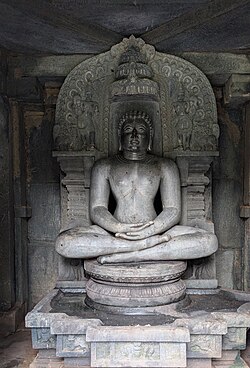 — Padmasana
Seated cross-legged in perfect symmetry, hands resting in the lap with palms upward — this is the posture of inward gathering. The body becomes a temple; the breath, an offering; the gaze, a returning home.
Neminath's idols in this posture appear most often in temple sanctuaries — their stillness designed to hold the worshipper's wandering attention until it, too, settles.
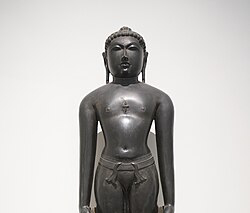
 — Kayotsarga
Standing perfectly upright, arms hanging free of the body, gaze fixed forward — Kayotsarga is the discipline of being absolutely present in the body while remaining absolutely free of it. The body is acknowledged but no longer identified with.
It is the posture of one who has prepared to leave at any moment — and who therefore has nothing left to fear.
Jain iconography is precise. Colour, geometry, attendant figures, throne details — nothing is decorative. Everything is a name.
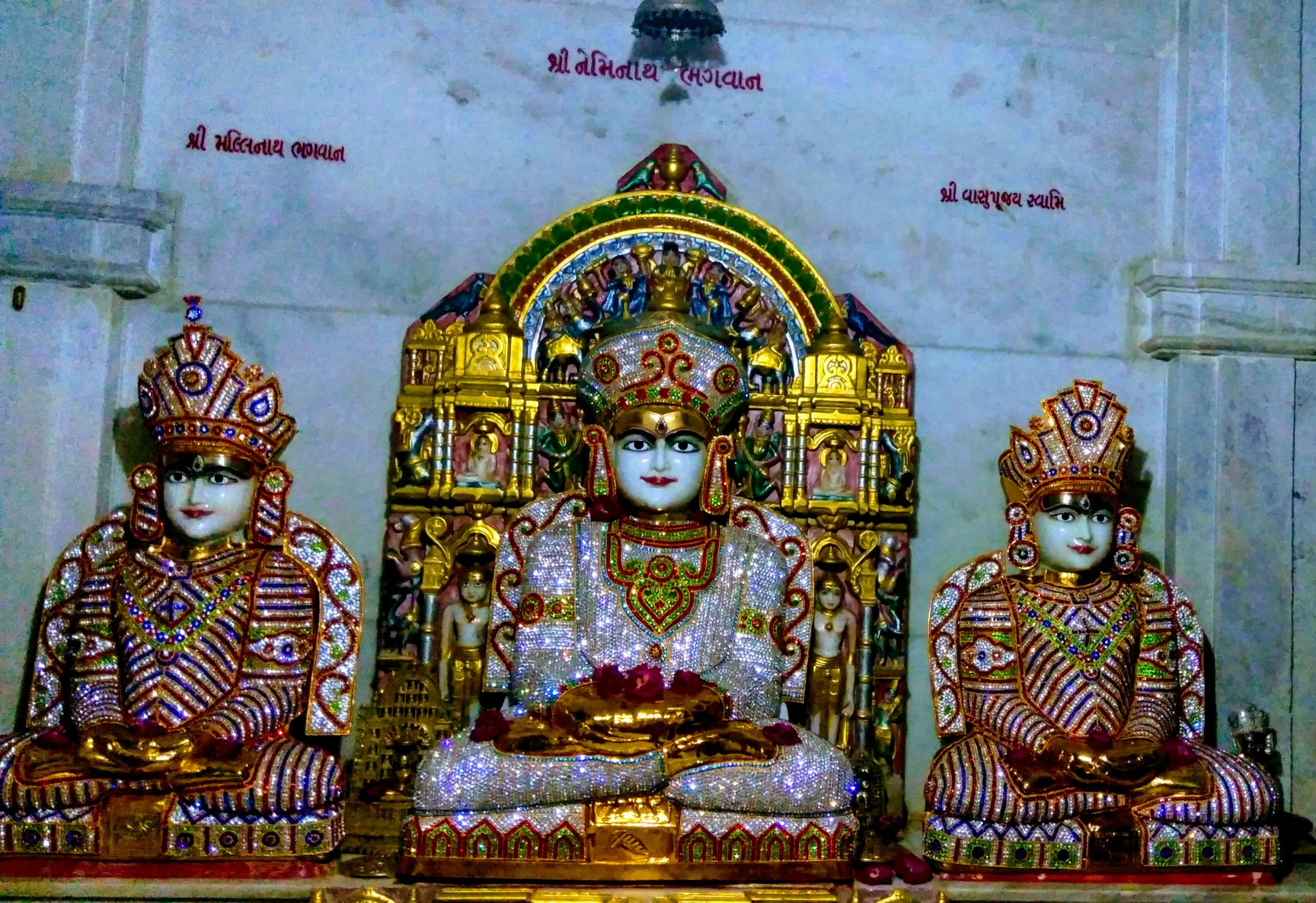
Jain temples honouring Lord Neminath are oriented around sacred geometry — concentric circles, mandalas, and the precise proportions of the samavasarana, the celestial preaching hall said to have appeared upon his omniscience.
The principal idol typically sits at the visual and spiritual centre. Concentric rings of devotees, attendants, and protective figures radiate outward, mirroring the cosmology of the Tirthankara's discourse: a still, luminous centre from which dharma extends in all directions.
The Girnar peaks, the temple at Junagadh, and the marble shrines of Dilwara all echo this same arithmetic — the architecture inviting the worshipper to become geometrically aligned with their own innermost stillness.
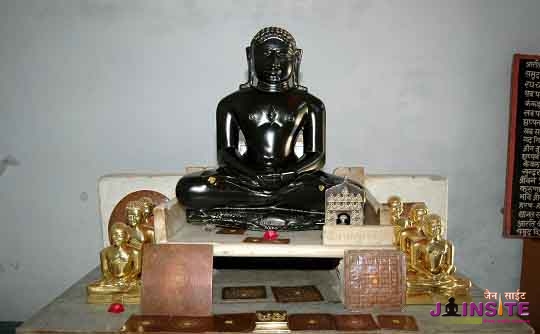
From medieval bronze to contemporary marble, depictions of Lord Neminath share an unmistakable inner geometry — the steady gaze, the parallel symmetry, the discipline of the carved spine.
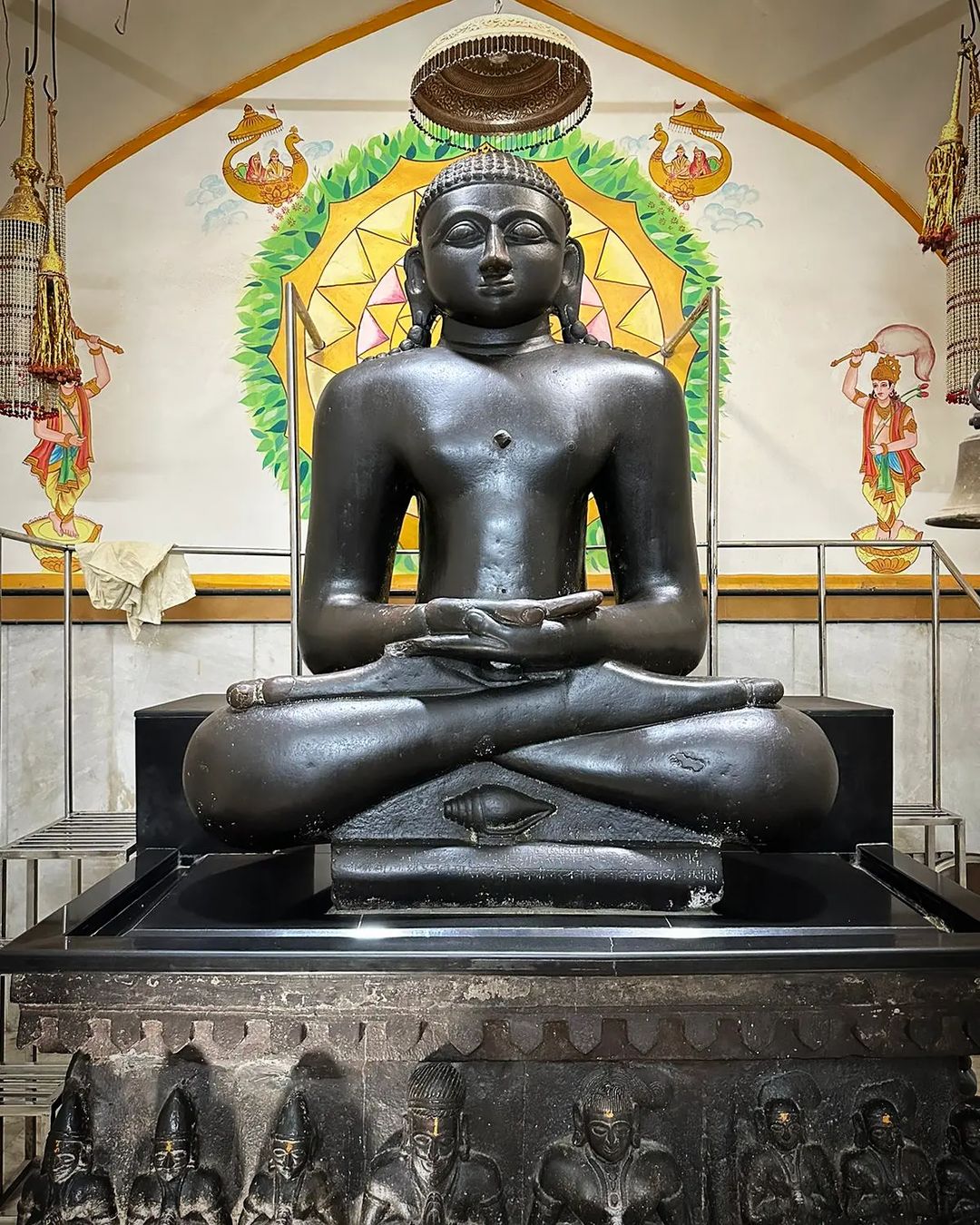
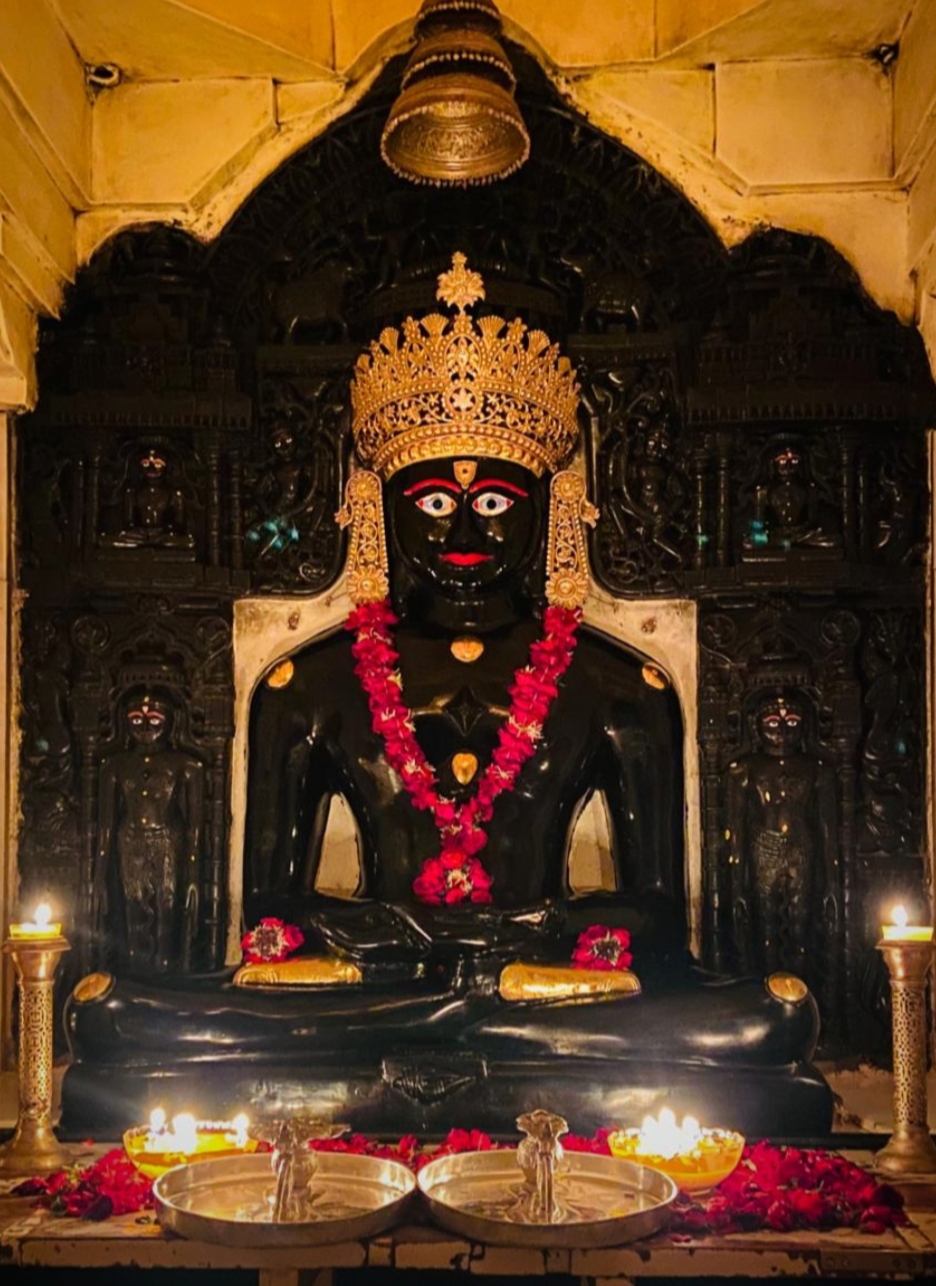
Idol carved with precise geometric symmetry — a study in stillness.
A site of revered miracles, drawing pilgrims for centuries.
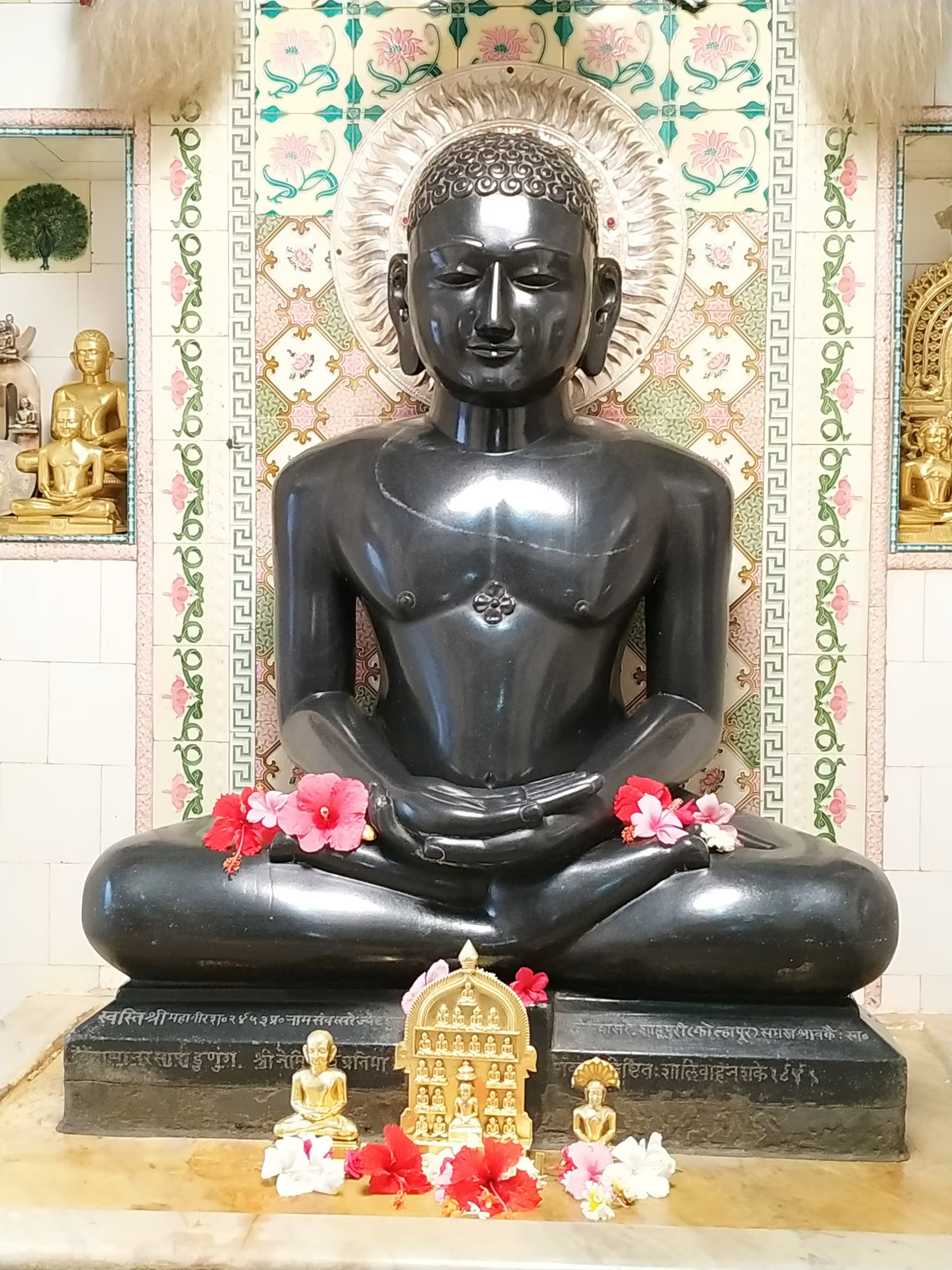
An exquisite expression of South Indian Jain architecture.